Schedules & Thresholds

Know when your partner payout actually lands

Payout timing follows a chain of approval, threshold and processing rules; here is how each stage moves your money.

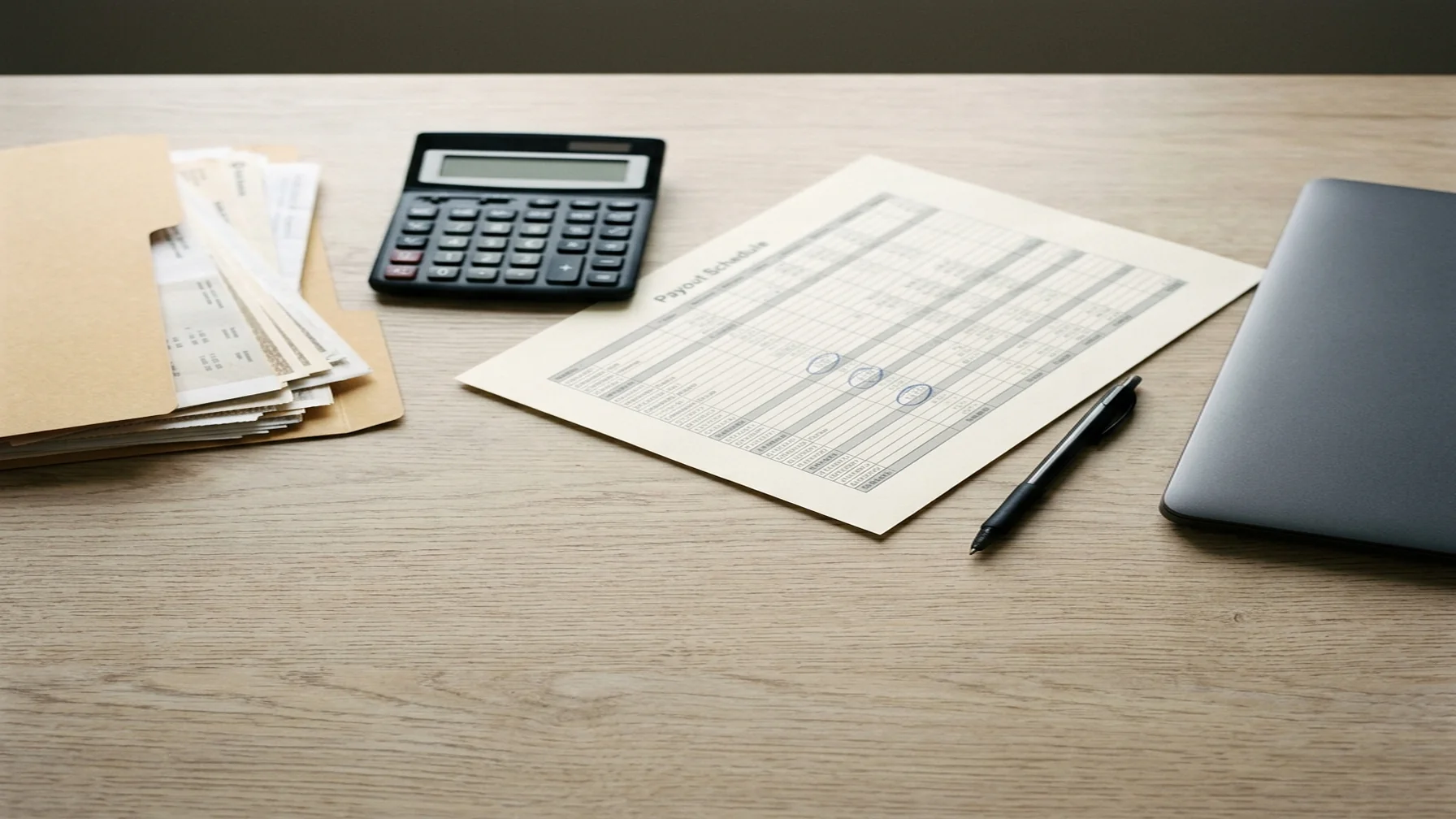
A desk with a printed payout schedule marked in pen, a calculator and a bank statement folder, lit by window light

What You Get From This Site

Practical guidance on when partner payments arrive, how they are sent, and how to record them without guesswork.

01

Pick a payout method that fits

Compare how methods differ in arrival time, fees and currency handling, and what to check before switching. The goal is a method that matches your payment size and where you are paid, not the one with the loudest marketing.

Payout methods compared
A person at a wooden desk comparing payout options on a laptop, a card and a notebook with handwritten notes beside it, soft daylight from a side window

02

Know when money actually lands

Payout schedules and minimum thresholds decide the date on your statement. Learn how cut-off days, approval steps and processing time stack up, so a pending balance is never mistaken for a missed payment.

Schedules and thresholds
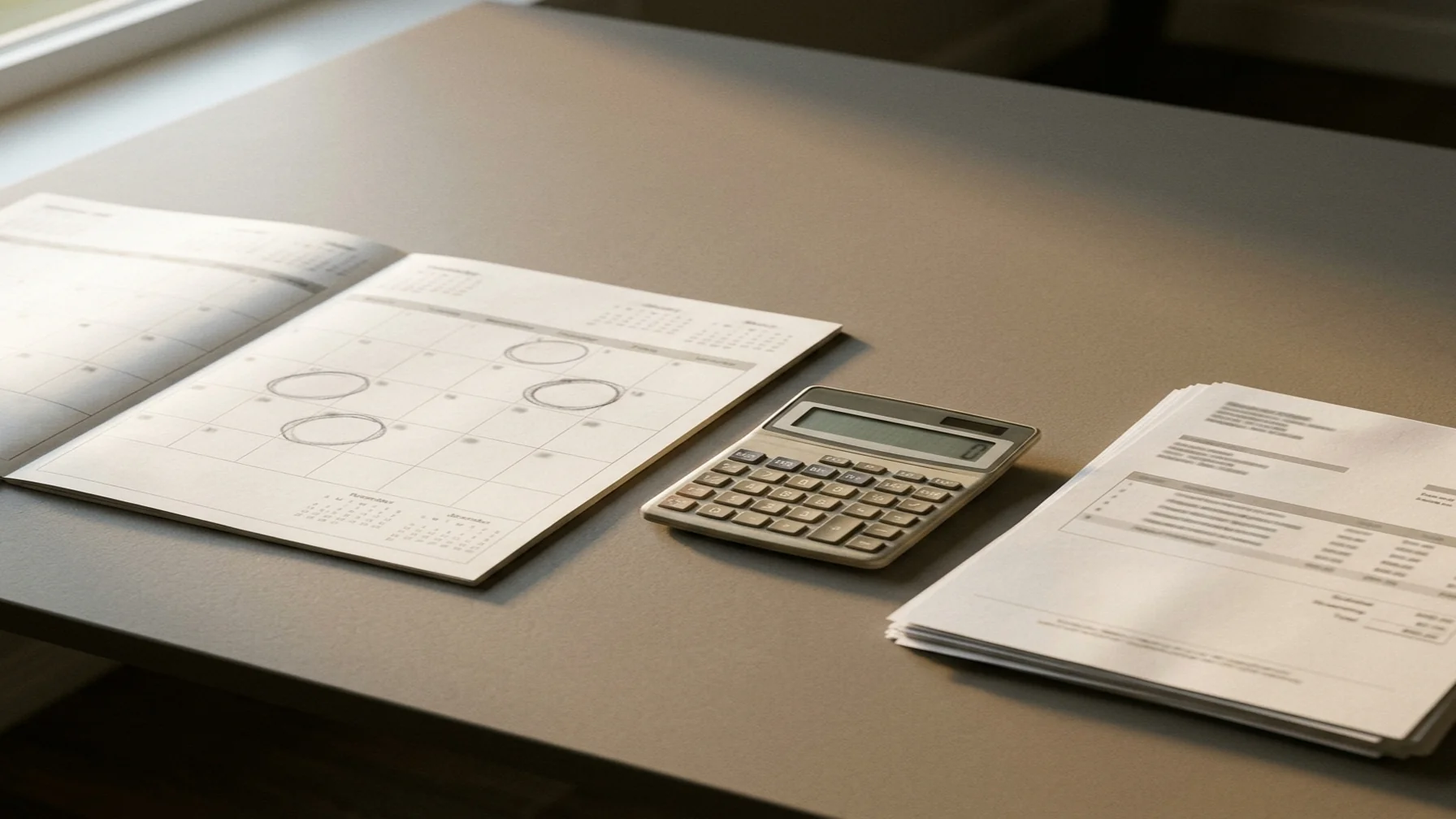
A wall calendar with a few dates circled in pencil next to a phone showing a pending payment notification, morning light across the desk

03

Keep books that survive review

Treat commissions, fees and withholding as separate lines from day one. Clear records make tax season and dispute conversations shorter, and they show exactly which payment a charge belongs to.

Bookkeeping basics
An open ledger notebook with neatly ruled columns and a calculator, a folder of printed statements stacked behind it on a dark desk
A desk with a laptop showing a blank spreadsheet, a bank statement printout and a calculator, a card reader at the edge of the frame, daylight from a window

Payout Methods

Pick a payout method that fits your bank

Each method trades speed against fees, minimums and record-keeping effort, so choose by how you reconcile income, not by headline speed.

  • Bank transfer: lowest per-payment cost, but slower settlement and a higher minimum.
  • Digital wallets: fast access, offset by withdrawal and conversion fees.
  • Card and prepaid rails: quick for small balances, harder to match to invoices.
Compare payout methods

Payout methods, compared by what reaches you

Four payout routes and the practical differences that decide which one fits your balance, your bank and your tax records.

Close-up of a laptop on a wooden desk showing a bank account routing form, a checkbook and a pen beside it in daylight

Bank transfer: lowest cost per dollar

An ACH or wire transfer moves the full payout minus the processor's flat fee, so the cost per dollar falls as your balance grows. ACH settles in a few business days and needs your account and routing numbers exactly as the bank prints them; a mismatch bounces the payment and adds a delay. Wires clear faster and usually cost more, which makes them a poor fit for small monthly balances.

Read payout method guides
Hand holding a phone showing a payment app balance above a kitchen table with mail and keys

E-wallets: fast access, extra hop

PayPal, Payoneer and similar wallets put money in reach within a day or two and let you hold multiple currencies. The trade-off is a second conversion: the platform pays the wallet, then the wallet charges to move funds to your bank, and that rate is set by the wallet rather than the platform. Check the withdrawal fee before you treat a wallet balance as cash.

Compare wallet withdrawals
Wall calendar with a few dates circled in pencil next to a calculator and a stack of invoices

Thresholds decide when you get paid

Most programs hold a payout until your balance clears a minimum, then release on a fixed schedule such as monthly or twice monthly. A $50 threshold with a monthly run means a $30 month pays nothing until the next balance adds up. Read the threshold and the cutoff date together: a payment approved after the cutoff slips to the following cycle, which can add weeks to the wait.

Browse schedule explainers
Open folder of printed payout statements beside a notebook with handwritten columns of figures and a pen

Keep records before tax season

Each payout is income, and the platform's year-end form may not match your own count if payments landed in different calendar years. Save the statement for every payout as it arrives, note the gross amount, the fee and the net, and tag the method used. That habit turns a January scramble into a folder you can hand to a bookkeeper or paste into a spreadsheet.

Read bookkeeping basics

Schedules & Thresholds

Know when your payout actually lands

Payout dates depend on your platform's schedule, your threshold, and the payment rail, so check all three before you plan around the money.

Read payout timing guides

Newsletter

Get new payout guides by email

One email when we publish a guide on payout timing, method changes or bookkeeping for partner programs.

We use your address only to send these guides. Unsubscribe from any email. We do not sell or share your address.